


Murghab

-
Directed by: Martin Saxer and Daler Kaziev
-
Released: 2021
- Year of Production: 2019
A generation ago, Murghab was well taken care of. As the highest town of the former Soviet Union at 3600 metres above sea level and close to the sensitive borders with Afghanistan and China, the town enjoyed ample provisions from Moscow brought in via the Pamir Highway. It featured electricity around the clock, an airport with regular flights, a movie theatre, and a hospital with central heating. Since then, Murghab and its people have weathered several storms and many of the Soviet hallmarks are crumbling away. Yet, life goes on and, with wit and improvisational skills, the ruins of Socialism afford a plethora of new but precarious ways to make do.
The film provides a window into contemporary life in Murghab. It offers glimpses into people's daily routines, inviting the audience on a journey to the Pamirs. It follows a group of men harvesting shrubs on the windswept high-altitude plateau, a nurse keeping regional health statistics, a passionate teacher inspiring a sense of history and purpose in her class, and a welder building stoves from the scraps of Soviet modernity. A winter film of hardship, work and hope.
FESTIVALS & SCREENINGS
- DOK.fest Munich - World Premiere
- Locarno Film Festival - International Premiere
- EthnoKino Bern
- Autrans International Mountain Film Festival
- Silk Road International Film Festival
- Big Sky Documentary Film Festival - Best Feature Competition
- German International Ethnographic Film Festival
- Film Festival della Lessinia
- Dumbo Film Festival New York
- ImagineIndia International Film Festival Madrid
- Ulju Mountain Film Festival
- International Film Festival Innsbruck
- DOCUTAH
- International Ethnographic Film Festival of Quebec
HAVE THE FILMMAKERS SPEAK AT YOUR EVENT
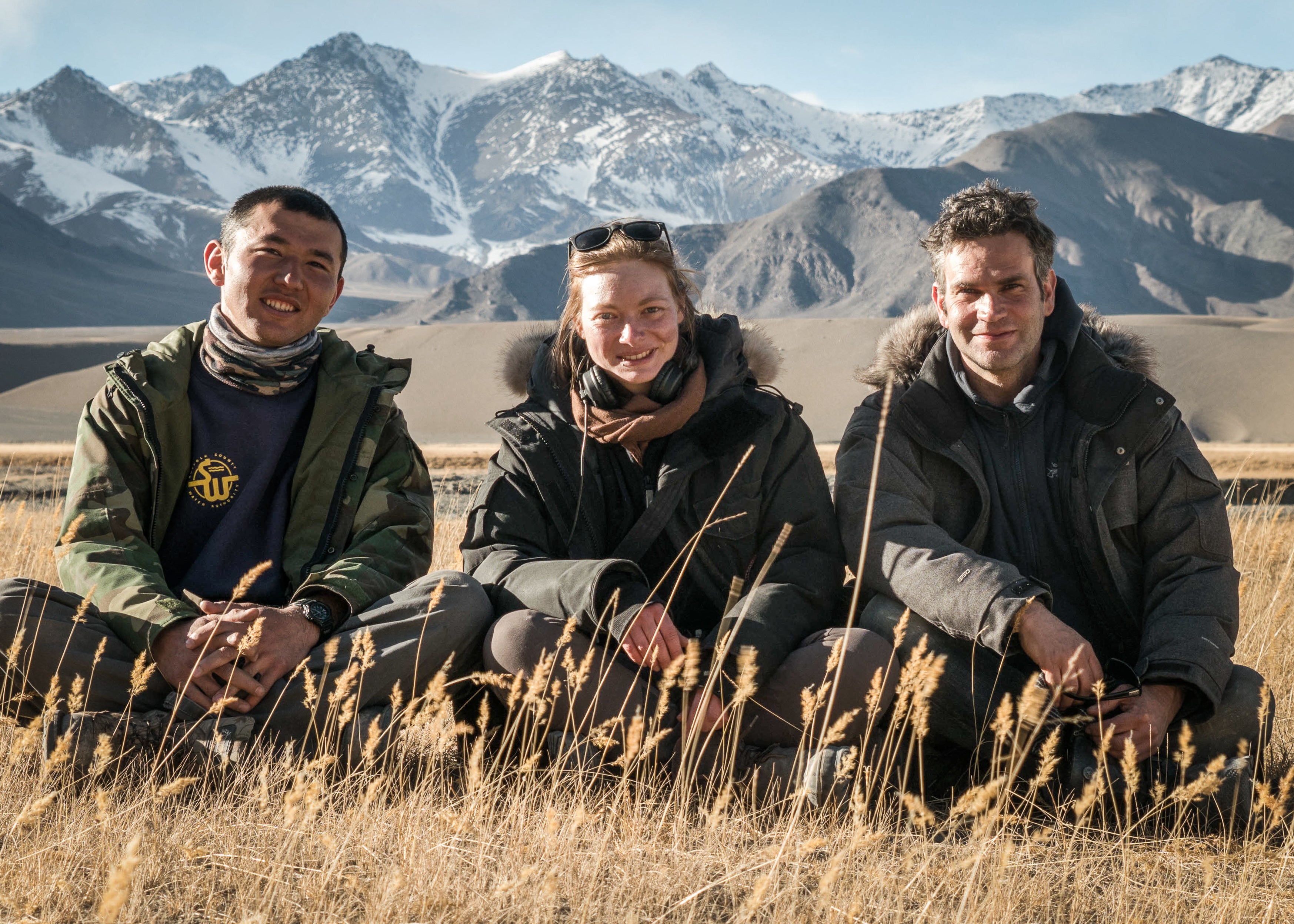
Martin Saxer is an anthropologist based in Munich, Germany. He was a Clarendon scholar at Oxford and received his doctorate in 2010. He conducted extensive fieldwork in Siberia, Tibet, Nepal and Tajikistan. From 2015 to 2020, he was leading the 5-year research project Remoteness & Connectivity: Highland Asia in the World, funded by a European Research Council Starting Grant (see highlandasia.net). He is currently working on his new project Foraging at the Edge of Capitalism. He wrote two books, made several exhibitions and created the visual ethnography blog theotherimage.com. Murghab is Martin’s third feature-length documentary film.
Marlen Elders completed her MA in Social and Cultural Anthropology with a thesis on exploring aesthetics and sensory perception, experimenting with creative research methods including audio-visual techniques. In Summer 2017 she co-curated an exhibition on Munich’s environmental (hi)stories at the Rachel Carson Center (see Ecopolis München). From 2016 to 2020 she was part of the research project Remoteness & Connectivity: Highland Asia in the World.
Daler Kaziev completed his BA at American University of Central Asia, Bishkek (Kyrgyzstan) in 2017. Majoring in the field of Environmental Sustainability and minoring in Anthropology, his BA thesis was about the Community Resilience and Commodification of Natural Resources in the Eastern Pamirs of Tajikistan. Since 2015, Daler has been collaborating with the team of the project Remoteness & Connectivity: Highland Asia in the World. Currently, Daler is completing his Masters degree at the Department of Natural Resources, Cornell University.
Host a Screening and Book the Filmmaker at your Event